
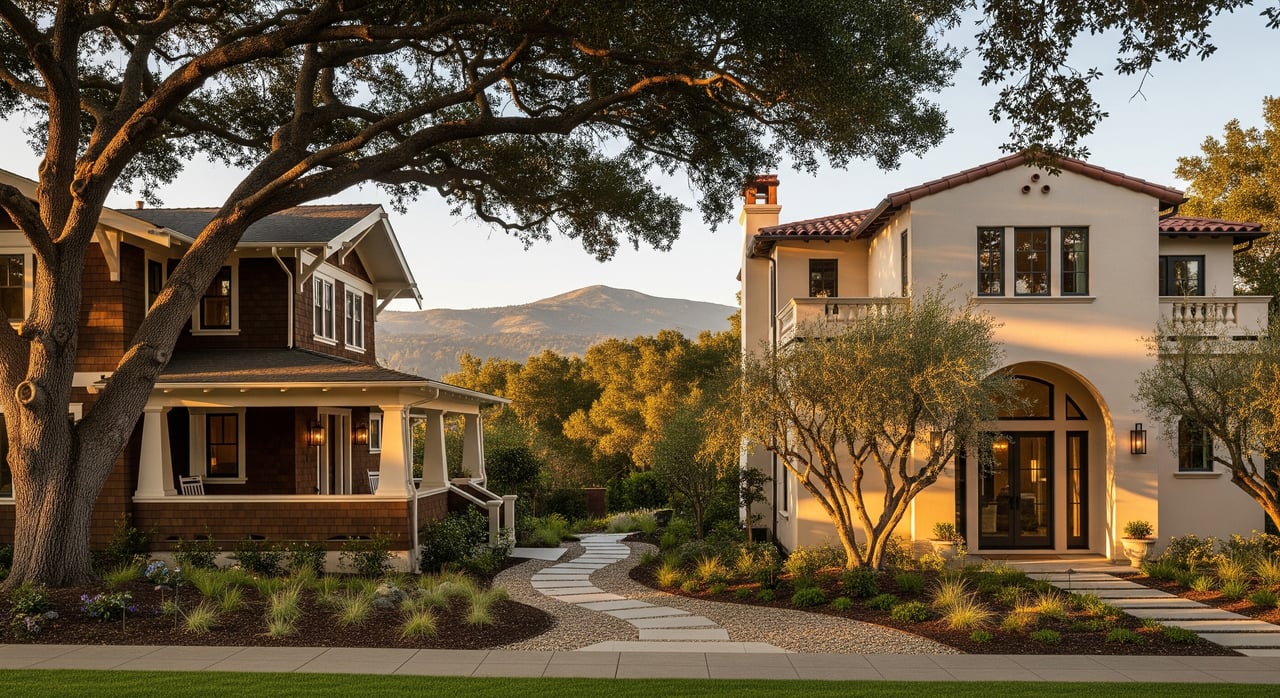
Torn between West Side and East Danville and not sure which fits your life best? You want the right balance of space, convenience, and future resale without second guessing your choice. In this guide, you will see how lot sizes, housing styles, walkability, commutes, and pricing patterns differ so you can decide with confidence. Let’s dive in.
How we define West vs East
For this guide, West Danville means neighborhoods west of I-680, including areas closer to the historic downtown corridor. East Danville means neighborhoods east of I-680 that extend toward the town’s more suburban and semi-rural pockets. Local boundaries can be fuzzy, but using I-680 as the divider keeps the comparison clear and practical for daily life and commuting.
Homes and lot sizes
West Danville generally offers more mid-century homes and older subdivisions near downtown. You will often find smaller to moderate lots and a classic neighborhood fabric with closer setbacks and narrower side yards.
East Danville typically features more post-1970s development and planned subdivisions. Expect a higher share of newer or custom homes, two-story floor plans, and larger parcels that can range from generous suburban lots to semi-rural or estate-style properties.
These patterns shape day-to-day living. West Side homes can feel more connected to town life with lower exterior maintenance. East Side properties can deliver more privacy, yard space, and project potential, with more upkeep to match.
Maintenance and expansion
- Larger yards on the East Side often mean higher landscaping and utility costs but more room for gardens, play areas, and pools.
- Older West Side homes can offer charm and walk-to-downtown convenience. You may plan for interior updates or thoughtful additions over time.
- Expansion potential varies by parcel size and zoning. If future projects matter, add lot dimensions and setbacks to your must-check list.
Walkability and amenities
West Danville’s proximity to downtown gives you higher everyday walkability for coffee, dining, services, and community events. The neighborhood grid and shorter block patterns make short trips on foot feel natural.
East Danville is more car oriented for errands and dining, though you will find pockets of convenience around local centers. Many East Side addresses offer quicker access to open space and town trails, plus a quieter, more private suburban feel.
The Iron Horse Regional Trail runs through Danville and improves bike and pedestrian access across parts of town. If non-car mobility matters, check where trailheads and sidewalks are relative to any home you are considering.
How to test walkability
- Map 5 and 10 minute walks from a specific address to see what you can reach without a car.
- Look at continuous sidewalks, crosswalks, and street crossings along the route, not just distance.
- Pair these checks with a quick bike route look to the Iron Horse Regional Trail for weekend and school-day use.
Commutes and transit
I-680 is the backbone of regional travel for Danville. It connects you to Walnut Creek and Concord to the north and Dublin, Pleasanton, and Silicon Valley routes to the south. Your access to on-ramps and local arterials will shape daily commute times.
Danville does not have a BART station. Common park-and-ride options include Walnut Creek BART, Pleasant Hill BART, and Dublin-Pleasanton BART. Local bus services and regional shuttles operate with varying frequencies, but most commuters drive to BART or directly to work.
West Danville addresses may require a few extra minutes on local streets to reach I-680 but can be quicker for downtown errands. East Danville addresses often have more direct access to I-680 for southbound or northbound trips, which can be an advantage for Dublin-Pleasanton BART or Tri-Valley commutes.
Typical time ranges
Real-world drive times vary with traffic and time of day, but here are common patterns drawn from typical routines:
- From West Danville to Walnut Creek BART: about 10 to 20 minutes by car in many cases.
- From East Danville to Dublin-Pleasanton BART or major Tri-Valley hubs: about 20 to 35 minutes by car depending on congestion.
- Reaching an I-680 on-ramp from the East Side can be a short 5 to 10 minute drive from many neighborhoods.
- Downtown Danville errands from East neighborhoods often run 8 to 12 minutes by car.
For your specific routine, test both A.M. and P.M. windows and compare door-to-door times.
Pricing patterns
A common pattern in Danville is that East Side homes often command a premium for larger lots, newer construction, and estate-style parcels. West Side homes can offer closer-in convenience and, at times, more approachable entry points for buyers who prioritize walkability over land.
Inventory can flip these behaviors. When supply is tight in one pocket, bidding can compress differences across town. Renovation level, views, cul-de-sac placements, and micro-locations near downtown or trailheads can add premiums regardless of east or west.
Compare apples to apples
To get a clean read on value, compare like-for-like:
- Use a 6 to 12 month window of recent single-family sales within a 0.5 to 1 mile radius.
- Line up similar lot sizes, year built, and condition level before comparing price per square foot.
- Note median figures for sale price, price per square foot, days on market, and sale-to-list ratio rather than relying on a few outliers.
- If an estate parcel shows up in the data, review medians and percentiles so one sale does not skew the picture.
Day in the life examples
Use these snapshots to picture daily rhythms and tradeoffs.
West: walk to downtown
- Morning: Take a 10 to 15 minute walk to a downtown café. If you drive to Walnut Creek BART, a 10 to 20 minute trip is common.
- Midday: Walk to lunch or run an errand on foot. Quick access to local parks and community events.
- Evening: A modest yard means lower maintenance and an easy setup for outdoor dining. Quick walk or short drive to nearby trailheads.
What you gain: daily walkability and town energy. What you trade: smaller lots and, in some cases, older home systems to update.
East: space and privacy
- Morning: Reach an I-680 on-ramp in about 5 to 10 minutes, then 20 to 35 minutes to a tech campus or Dublin-Pleasanton BART in typical conditions.
- Midday: Drive for most errands or lunch spots. Quiet streets and cul-de-sacs are common.
- Evening: Host friends in a larger backyard or work on projects in the garage. Weekend hikes are close by.
What you gain: more outdoor space and often newer builds. What you trade: more car time for errands and sometimes longer peak-hour commutes.
Hybrid: middle ground
- Choose a block near Danville Boulevard or a transitional area that balances a slightly larger lot with a 10 minute walk to a café cluster.
- Commute access feels closer to East Side patterns, while you still enjoy some town convenience.
What you gain: a blend of space and walkability. What you trade: you will not maximize either extreme.
Decision checklist
Use this to score your priorities before you tour.
- Commute priorities
- Primary destination and acceptable door-to-desk time
- Peak-hour tolerance and preferred mode
- Drive to BART vs direct drive
- Lot, house, and upkeep
- Desired outdoor space for pets, pool, or gardening
- Willingness to maintain larger landscaping
- Preference for newer construction vs older character homes
- Day-to-day lifestyle
- Frequency of walkable dining and errands
- Proximity to trails and open space vs proximity to downtown
- Resale and liquidity
- Likely hold period before selling again
- Buyer pool breadth for downtown-adjacent vs estate-style homes
- Price per square foot and potential to expand
- Costs beyond price
- Utilities and landscaping for larger lots
- Insurance and property tax considerations on newer or larger homes
- Data checks before an offer
- Recent comps within 0.5 to 1 mile and 6 to 12 months
- Side-by-side price per square foot for similar lot sizes and year built
- Property history and renovations, including ADUs
Which side fits you
If you love being out the door and on foot for coffee, dinner, and local events, West Danville likely suits your rhythm. If you prioritize a larger yard, privacy, and newer construction, East Danville may feel like home. Many buyers land in a transitional pocket to balance both.
When you are ready to narrow your search, partner with a local advisor who knows the micro-markets, the trail access points, and the commute shortcuts that do not show up in generic maps. If you want a personal walkthrough of neighborhoods that match your lifestyle, reach out to Ashley Mancera.
Ready to compare on-the-ground options and recent comps tailored to your goals? Connect with Ashley Mancera for a neighborhood-by-neighborhood plan and a clear path to your next home.
FAQs
What defines West vs East Danville in this guide?
- We use I-680 as the divider, with West Danville west of I-680 near downtown and East Danville east of I-680 extending toward suburban and semi-rural areas.
How does walkability differ between West and East Danville?
- West Danville generally offers higher walkability to shops, dining, and community events, while East Danville leans more car oriented with better access to open space and trails.
Which side offers faster access to I-680 and BART?
- East Danville often has quicker I-680 access and convenient routes to Dublin-Pleasanton BART, while West addresses may be quicker for downtown errands and use Walnut Creek or Pleasant Hill BART.
Do East Danville homes usually cost more than West Danville?
- A common pattern is higher pricing in East areas for larger lots and newer construction, though inventory, renovations, views, and unique locations can flip this trend.
How can I fairly compare prices across the two sides?
- Match like-for-like comps on lot size, year built, and condition within a 0.5 to 1 mile radius, then compare medians for price, price per square foot, and days on market.
What should I consider about maintenance when choosing a side?
- Larger East Side lots require more landscaping and utility budget, while West Side properties often trade yard size for lower upkeep and closer-in convenience.