
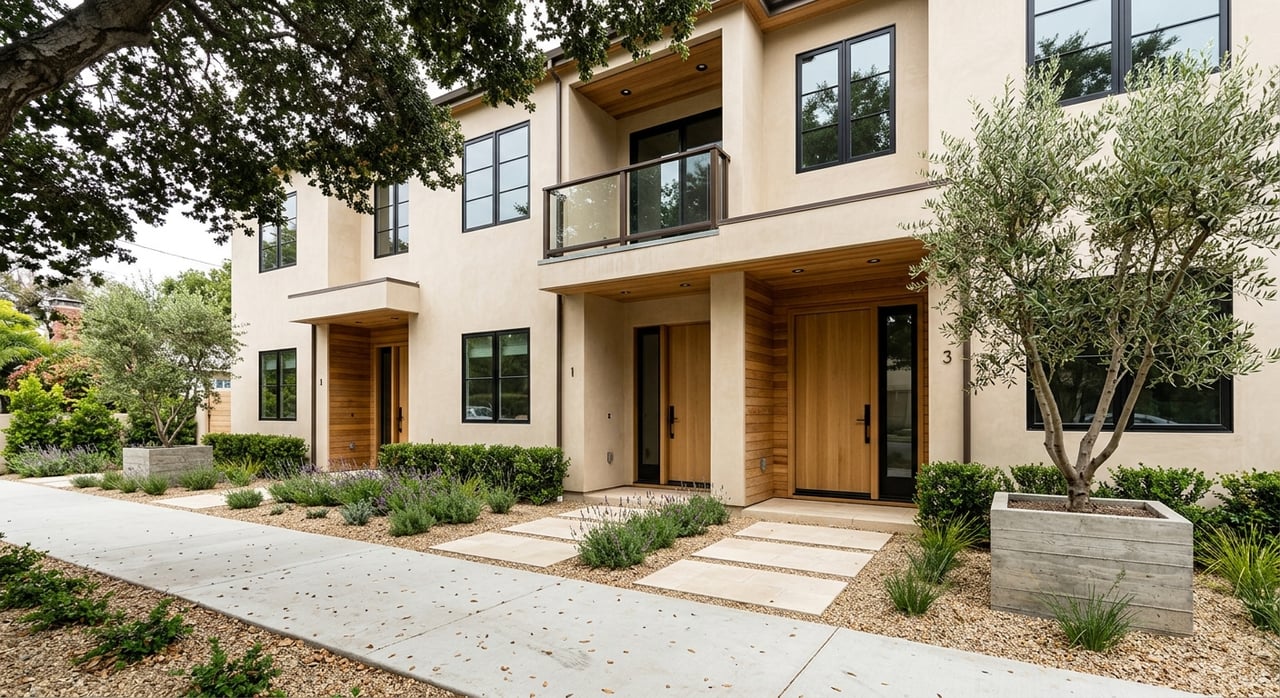
Wondering whether a condo or a house makes more sense in Walnut Creek? You are not alone. Many buyers find that the choice is less about the label on the property and more about your budget, your daily routine, and how much maintenance you want to take on. If you are comparing options in Walnut Creek, this guide will help you look at price, lifestyle, location, and monthly costs with more confidence. Let’s dive in.
Why the choice is not always obvious
In Walnut Creek, property types do not always follow a simple price ladder. Current listing data shows condos as the lowest-cost entry point overall, with a median listing price around $560,000, while townhouses are around $899,000 and the citywide median sale price for all home types was $845,000 last month. Zillow also shows Walnut Creek condos ranging from the low $200,000s to well above $1 million.
That wide spread matters. A well-located condo with strong amenities can compete with a smaller detached home on monthly cost, while some townhomes can sit close to single-family pricing. In other words, you will usually make a better decision by comparing the full monthly payment and your lifestyle priorities rather than assuming one home type is always cheaper than another.
Compare costs beyond the price tag
The listing price is only part of the picture. In Walnut Creek, HOA dues can vary dramatically, and they may play a major role in your monthly payment.
Current listing examples show HOA dues around $117, $513, $640, $685, $690, $1,273, and even $1,294 per month across different condo and townhouse listings. That is a big enough range to change what feels affordable from one property to the next. Two homes with similar prices can have very different monthly carrying costs once HOA fees are added.
What to include in your monthly comparison
When you compare a condo and a house, it helps to line up the same categories for each option:
- Mortgage payment
- Property taxes
- Homeowners insurance
- HOA dues, if applicable
- Expected maintenance and repair costs
- Commute and transportation costs
A house may come with no HOA, but you will likely handle more upkeep yourself. A condo may simplify exterior maintenance, but the dues need to fit comfortably into your budget.
Understand what you actually own
Ownership structure is one of the biggest differences between condos and houses. In California, condo owners generally own the unit’s airspace, while the homeowners association owns the land, building, and shared common areas. In common-interest developments, owners are usually association members and agree to follow CC&Rs while paying regular fees and assessments.
A detached home in a standard subdivision is different. According to the California Department of Real Estate, the owner typically has exclusive ownership of the lot itself, not just the interior living space. That usually means more control over the yard, the exterior, and how the property is maintained.
Why this matters in daily life
This ownership difference often shapes your day-to-day experience. A condo or many townhomes can be a strong fit if you want more lock-and-leave convenience and less direct responsibility for exterior upkeep. A detached house often works better if you want more autonomy over landscaping, outdoor projects, and exterior decisions.
Neither option is automatically better. The better choice is the one that matches how you want to live.
Lifestyle fit in Walnut Creek
Walnut Creek offers a mix of downtown convenience, established neighborhoods, and outdoor access. That makes it a place where your preferred lifestyle can matter just as much as the home itself.
When a condo may make sense
A condo may be a smart fit if you want a lower-maintenance lifestyle, easier travel, or better access to downtown and transit. This can appeal to first-time buyers, downsizers, commuters, and buyers who simply do not want to spend weekends managing exterior upkeep.
In Walnut Creek, condos often make the strongest case when they are close to downtown, BART, and the trolley. If you want to be nearer to shops, dining, and transit options, attached housing near the core may line up well with your goals.
When a house may make sense
A house may be the better fit if you want private outdoor space, fewer shared walls, and more control over the property. Detached homes also tend to offer the clearest path for buyers who prioritize exclusive use of the lot.
That extra privacy and yard space usually comes with more maintenance. Depending on the location, it may also mean relying more on a car for errands or commuting.
Think carefully about outdoor space and privacy
If outdoor living matters to you, this is an important area to compare. The California Department of Real Estate notes that standard subdivisions give the owner exclusive rights to the whole parcel, while higher-density attached projects usually reduce exclusive yard and open-space area.
That does not mean condo living equals no outdoor lifestyle. Walnut Creek manages more than 3,000 acres of open space and over seven miles of neighborhood trails, so you may find that public outdoor access helps offset a smaller private yard. For some buyers, that trade-off works very well. For others, a private backyard is still a non-negotiable.
Walkability depends on the address
One common mistake is assuming all of Walnut Creek offers the same walkable lifestyle. It does not. Redfin classifies Walnut Creek as minimally walkable overall, with a Walk Score of 41.
That citywide number only tells part of the story. Walkability is strongest around downtown and BART, where city planning has focused on making it easier to walk and bike between the station and downtown. The city also notes that Walk Walnut Creek covers more than 100 sites across four downtown blocks.
Condo vs. house for commuting
If you want a more car-light routine, condos and some townhomes near downtown may deserve extra attention. Walnut Creek is served by the Walnut Creek BART Station and the Pleasant Hill/Contra Costa Centre Station, and the city’s Route 4 Downtown Trolley runs seven days a week with service every 20 minutes from Walnut Creek BART Station.
BART also connects riders to Berkeley, Oakland, San Francisco, and both Bay Area airports. The Walnut Creek station at 200 Ygnacio Valley Road serves about 7,000 riders each day and continues to see improvements for safer pedestrian and cyclist access. If your week revolves around commuting or regional travel, location near transit may carry more value than extra square footage.
School assignment is property-specific
If schools are part of your home search, verify the exact address before making assumptions. In Walnut Creek, school assignment is address-based, not citywide.
The Walnut Creek School District says families should confirm attendance by residence address. Portions of the broader Walnut Creek area may also fall within Mt. Diablo Unified, and some neighborhoods with a Walnut Creek mailing address are outside city limits and under county jurisdiction. That means the city name or ZIP code alone does not tell you the full story.
For homes within Walnut Creek School District, the district says all WCSD addresses are assigned to Walnut Creek Intermediate for middle school, and high school enrollment is handled by Acalanes Union High School District. When you are deciding between a condo and a house, this is one more reason to compare exact properties instead of general assumptions.
A simple way to choose
If you feel stuck, try narrowing the decision to the one factor that matters most right now. In Walnut Creek, the biggest decision points are usually:
- Your total monthly budget
- Your comfort with HOA dues and rules
- Your need for private yard space
- Your preferred commute and transit access
- Your need to verify school assignment by address
- Your tolerance for maintenance and repairs
Once you know your top priority, the choice often becomes clearer. A condo may win on convenience and location. A house may win on privacy and control. Walnut Creek has enough price overlap that either path can make sense depending on the exact property.
The bottom line for Walnut Creek buyers
Choosing between a condo and a house in Walnut Creek is really about fit. Condos can offer a lower entry point, less direct maintenance, and strong access to downtown and BART. Houses can offer more privacy, private outdoor space, and greater control over the property.
The smartest move is to compare specific addresses, real monthly costs, and how each option supports your routine. That is where a broad online search turns into a confident decision. If you want help weighing condo fees, commute trade-offs, or neighborhood-by-neighborhood options in Walnut Creek, Hector Mancera would be glad to help you sort through the details.
FAQs
How do condo prices compare to house prices in Walnut Creek?
- Condos are generally the lowest-cost entry point, with current listings around a $560,000 median list price, but Walnut Creek has wide overlap across property types, so some condos and townhomes can approach house pricing.
What should buyers in Walnut Creek know about HOA fees?
- HOA dues can vary widely in Walnut Creek, with current examples ranging from about $117 per month to well over $1,200 per month, so they should be treated as a major part of your monthly housing budget.
Is a condo or house better for commuting in Walnut Creek?
- If commuting and transit access matter most, condos and some townhomes near downtown and BART may be a better fit, while detached homes farther from the core may offer more space but less walkability.
How does school assignment work for Walnut Creek homes?
- School assignment is based on the property address, not just the Walnut Creek city name or ZIP code, so buyers should verify each home’s attendance area directly before making decisions.
What is the main lifestyle difference between a condo and a house in Walnut Creek?
- In general, condos offer more convenience and less direct exterior maintenance, while houses offer more private outdoor space, fewer shared walls, and more control over the property.